Related Post
It can be challenging to remember where your paycheck goes when you’re earning an income. When taxes are taken out of your earnings, you might not clearly understand how much is going towards the various deductions and what’s going to be left over for living expenses. A pay stub will provide a detailed breakdown of all these things so that you know what’s happening with your money. However, make sure your employers use the best pay stub generator so that your pay stub is always accurate. In this post, let’s discuss why you might need a pay stub.
Helps Apply for a Loan
 If you need a loan, having a pay stub can be very helpful. Lenders often require proof of income before they’ll approve a loan, and a pay stub is the best way to provide this information. You might have to provide other documents such as bank statements or tax returns to prove your income without a pay stub. Having a pay stub can also be helpful when you’re trying to sell or buy a home. Most lenders require proof of income before they’ll approve a mortgage, and having a pay stub will make the process much easier.
Makes Sure You’re Not Underpaying Taxes
One of the most important reasons to have a pay stub is so that you can be sure you’re not underpaying your taxes. The IRS requires employers to report wages, salaries, and other income information for each employee. This information is used to calculate how much tax needs to be withheld from each paycheck. If you don’t receive a pay stub, you might not realize that the money withheld from your wages is too little.
Comes in Handy When Renting an Apartment
If you’re renting an apartment, your landlord will likely require a copy of your pay stub. The rent is often based on how much money you earn. By providing a pay stub, you can show your landlord that you’re able to afford the rent and that you have a steady income. Having a pay stub can be very helpful in several different situations. If you’re not sure whether or not you need one, talk to your employer about getting one. It can be an excellent tool for understanding your finances and ensuring that you’re taking full advantage of all the deductions available to you.
Receives Compensation in the Event of an Injury
 If you’re injured at work, your employer might provide compensation in the form of a pay stub. It is often called workers’ compensation. You can ensure that you’re getting the correct amount of money for each paycheck by having a pay stub. It can be challenging to prove that you’re receiving the right amount without a pay stub. If your employer denies that you’re getting paid, a pay stub can be very helpful in proving it to them.
Having a professional-looking pay stub can help you in so many ways. However, make sure to use the best online pay stubs maker so that your pay stub complies with any federals in states. Aside from that, you need to see if the information in your pay stub is accurate.

If you plan on organizing company meetings in varying venues apart from your office, selecting a suitable conference venue is imminent. Regardless of the size of the meeting, if your loyal and essential customers are expected, it is always a great idea to put your best foot forward and get the best services and accommodation for your clients.
There are numerous things to bear in mind when planning a crucial business meeting. You are sure to minimize your workload if you rent a suitable venue for the kind of meeting you plan on holding. Below are a few more reasons to consider hiring a conference space for your next meeting.
Adaptability
There is no single option that works for all types of events. Depending on the nature of the event, the venue or location you plan to hire should be flexible according to your needs. Meeting venues for hire can be very adaptable, and prior announcements can be made to accommodate the needs of all types of displays.
Whether it’s a large corporate team meeting or an intimate gathering, there is a particular conference venue suitable for your desired audience. For instance, the majority of high-end hotels have various meeting rooms to accommodate all kinds of meetings.
Creates a Good First Impression
If you want to give your clients an enjoyable experience that’s worth remembering, hold your conference in a suitable location. Meeting spaces are designed to wow and include that desired first impression which is essential if you need customers to be more engaging in business with your brand.
The tools available in the conversation rooms will assist in a successful conclusion to your conference. This action will make your potential customers more trusting about your capacity to sustain them. Additionally, your main intention is to make your guests satisfied, and the conference spaces for rent are formulated to support the demands of even the stringiest visitor.
Additional Help
Let us admit it; organizing an event is no piece of cake. The whole process cannot be handled by a single individual or a few staff members. Seldom, you need specialists such as event supervisors or rally planners to prepare a successful experience.
When hiring a conference venue, some contractors are likely to offer the services of a meeting planner to help you conduct a fruitful gig. The planner will make sure clients are attended to, and the venue has all the logistics required. They will also make sure that the experience echoes your firm in the best way.
The best bit about conference venues for rent is that workers are very often ready to go that extra mile and feature services that they ordinarily don’t handle.
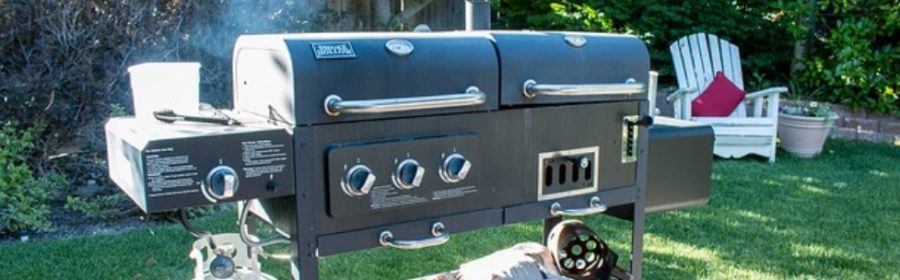
Most households in the United States have some type of grill, or barbecue. Most of these grills will last a long time, but when something goes wrong, they just replace them. Most of the components for these grills can be replaced with new parts.
Charcoal grills will need the least maintenance; they typically need new coal grates and metal cooking grills. Gas grills need more parts because they have many more components that wear down over time. Replacement parts for a gas barbecue include burners, valves, and the electric striker with valves and heat shields.
Here are some of the main parts of a grill;
Gas burners
 The burners are where all your heat comes from. They have been designed to cook or grill. The tank has pressure with a valve on the top of it. Attached to the valve is a high-pressure hose that goes to the grills on and off valve. The burner is a hollow pipe with the gas inlet and outlet ports, each will have their own separate control. Most grills have two burners, and there are smaller grills with only one.
Most burners on a gas grill are round burners. They have high-end grills that have up to four burners on them. The high-end grills are made of cast iron, and some are even stainless steelP.
Stainless steel grills and parts will last a lot longer than metal or aluminum grills do.
Grilling grates
The surface where you will be grilling your food on is the grate. Most of these will be stainless steel coated, so your food doesn’t stick while you are cooking; some high-end grates even come with no stick on them. When this need to be replaced, you will see the stainless steel coating will start to rust, or they get bent from taken them out over and over to clean them.
Rock grates or heat shield
The heat shield is the part that fits over the rocks that sits right above the burner. This stops the drippings that comes off of what you are grilling from hitting the burner and causing it to smoke or even catch fire. This part is made out of steel; it has to stand the most heat.
The heat shield is designed to stop the heat from making the tank get hot. It fits just under the bbq to reflect the heat.