

Related Post

Health is wealth and taking care of people’s health can help you making a lot of wealth. Health-care industry is growing exponentially with latest innovations in medical technology and creating a lot of jobs and career prospects. here are the days when we used to have a set of doctors to take care of us in all the situations.
These days the health-care industry offers a wide range and variety of support and facilities to keep you healthy. Since there are a lot of options in the health-care industry, career prospects regarding monitory benefits are also wide. Now the questions arise that what are the most rewarding jobs in health care industry.
So with a lot of options to choose from, lets take a look at some of the most rewarding jobs in health-care.
Pharmacist
 With a pretty decent average salary of $116,000, Pharmacists are the ones who bring out the prescribed medicines for you. They are champions of all kind of medical salts and know how they react. Pharmacists are responsible for making sure that patients are given the right medicines in right circumstances. Based on a study, employment of this career opportunity is expected to rise by 14% in next 7 to 8 years.
Nurse Midwife
This is a career prospect, which extends the circle of influence for a gynecologist. Certified Nurse-Midwives (CNMs) are the ones who provide medical instructions and care right from the start of your pregnancy until the delivery. These professional are more inclined towards women-centric medical issues and reproductive problems. With an average salary of $95, 000, CNMs are one of the top rewarding jobs in health care industry.
Physical Therapist
For the chronic diseases, rehabilitation processes and situations where recovery is slow and steady we need a Physical Therapist. These guys know how each part of our body works and how to make it work or strengthen it.
They can earn up to $80,000 and more if they are willing to work more hours. With the increasing physical injuries due to bad lifestyle, the requirement for these professionals are expected the rise by 36 % in another eight years.
Apart from the jobs mentioned above, there are a lot more options with the almost same amount of earnings involved. Some of them are Dietician, Psychologist, Physician’s Assistant, Radiologic Technician, and Clinical Research Administrator.
 With the innovations in medical technologies,is not just confined to be a doctor or a nurse. There are a lot of other jobs, do a full report on what is being used in the medical sector. Certainly, the future of health care is bright, and the jobs under this domain are going to increase at a much faster rate than ever.
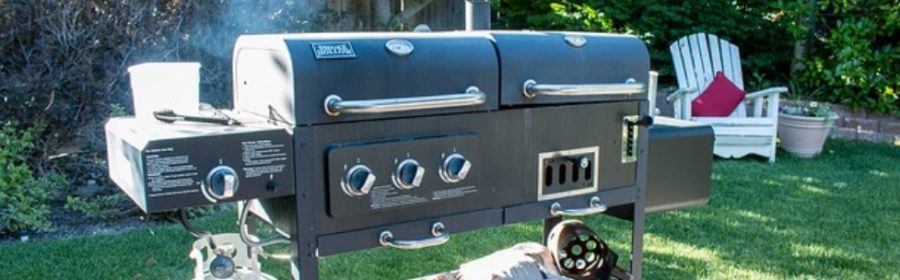
Most households in the United States have some type of grill, or barbecue. Most of these grills will last a long time, but when something goes wrong, they just replace them. Most of the components for these grills can be replaced with new parts.
Charcoal grills will need the least maintenance; they typically need new coal grates and metal cooking grills. Gas grills need more parts because they have many more components that wear down over time. Replacement parts for a gas barbecue include burners, valves, and the electric striker with valves and heat shields.
Here are some of the main parts of a grill;
Gas burners
 The burners are where all your heat comes from. They have been designed to cook or grill. The tank has pressure with a valve on the top of it. Attached to the valve is a high-pressure hose that goes to the grills on and off valve. The burner is a hollow pipe with the gas inlet and outlet ports, each will have their own separate control. Most grills have two burners, and there are smaller grills with only one.
Most burners on a gas grill are round burners. They have high-end grills that have up to four burners on them. The high-end grills are made of cast iron, and some are even stainless steelP.
Stainless steel grills and parts will last a lot longer than metal or aluminum grills do.
Grilling grates
The surface where you will be grilling your food on is the grate. Most of these will be stainless steel coated, so your food doesn’t stick while you are cooking; some high-end grates even come with no stick on them. When this need to be replaced, you will see the stainless steel coating will start to rust, or they get bent from taken them out over and over to clean them.
Rock grates or heat shield
The heat shield is the part that fits over the rocks that sits right above the burner. This stops the drippings that comes off of what you are grilling from hitting the burner and causing it to smoke or even catch fire. This part is made out of steel; it has to stand the most heat.
The heat shield is designed to stop the heat from making the tank get hot. It fits just under the bbq to reflect the heat.

If you own a cat, you can enjoy some benefits from investing in the best cat litter mat. Cats can mess the house if they are not taken care of. Almost all cats like to cover their poops, and therefore you need to provide kitty litter mat. After they are done with their business, their paws are usually messy and can easily litter the house. So, they need a mat to clean the paws.
Benefits of kitty litter mat
Cleans the cat’s paws
It is important to know your cat will feel uncomfortable when its paws become dirty. For this reason, in the absence of a kitty litter mat, your cat will use any material or object available to clean its paws. To help keep your carpets, expensive sofas, as well as rugs clean, it is important to buy a kitty litter mat for your cat.
Help keep your home clean
The kitty litter mat is supposed to be placed under your cat’s litter box. Once the cat leaves its litter box, its paws will always collect some dirt as well as several pieces of tiny litter. When returning to the litter box, the dirt and litter that it has picked on its paws will be wiped off by the litter mat. Also, every time the cat is leaving the litter box, the kitty litter mat will help wipe off any litter and dirt that it may have picked inside the litter box.
It is easier to clean your cat’s litter box
Cleaning a kitty litter mat is very easy; just shake the dirt off and then machine wash it. You can also use other methods of cleaning; including using a vacuum cleaner or a wet sponge. Cleaning the litter mat regularly helps keep it clean and hygienic.
Help prevent diseases from spreading
Allowing your cat’s dirty litter and feces to spread all over the house can expose your loved ones as well as your cat to disease. This is because cat feces contain certain bacteria, including E. coli, which can cause illnesses to the members of your family, especially to young children who are aged 5 and below. Using a litter mat will certainly help reduce the spread of cat litter and feces, thus lowering the risk of diseases.
Conclusion
Kitty litter mats are readily available in many stores and come in a variety of styles and sizes. It is advisable to buy one for your cat. You just need to ensure that you choose the best one for your cat in terms of style and size.