

Related Post

It is unfortunate, that with the vast advancements in auto technology people still get involved in vehicle accidents. In some cases, the cars involved in a collision can be recovered, and this is where getting the best repair services is crucial. Below we discuss how to determine the best services for your car collision repair.
Selecting the best car co
llision repair
References
This is an essential service selection initiative. By asking around or  scouring the web, you can get referrals from people who have had the same service provided to them. Especially when it comes to sensitive matters such as car collision, it is paramount that you hear what other people have to say before you attempt it. If a given service provider is known to provide the best services, chances are you will hear about them.
Staff
One of the most important factors is to check out the team that will be working on your vehicle. By randomly asking for their qualification you can quickly identify how competent the staff is. You want to choose a service provider that has experienced people in its team. This ensures that your wrecked vehicle gets the best restoration, which will make it safe to drive again.
Prices
As much as a service is proficient, it is still useless to you if it doesn’t fall under your budget. After making sure that the service provider is competent enough, ensure that you can afford their service. Some services are also overprices based on ridiculous patterns, for instance, a shop in a posh neighborhood might be expensive compared to a middle-class settlement are. Therefore, make your choice wisely based on your budget.
Added services
Added services such as towing can be an 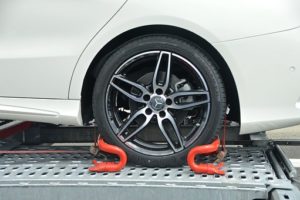 added advantage when selecting the ultimate car collision repair service. This ensures that you get all relevant services under one roof. While additional services are in no way a reflection of a service provider’s competence, it is still nice to have all the needed services provided by one entity. In some cases, this also ensures that the overall cost is cheaper.
These are some of the important factors to consider when seeking services for car collision repair. Cars are important, especially in contemporary times. Hence it is paramount to ensure that the individuals that work on it are qualified.

Health is wealth and taking care of people’s health can help you making a lot of wealth. Health-care industry is growing exponentially with latest innovations in medical technology and creating a lot of jobs and career prospects. here are the days when we used to have a set of doctors to take care of us in all the situations.
These days the health-care industry offers a wide range and variety of support and facilities to keep you healthy. Since there are a lot of options in the health-care industry, career prospects regarding monitory benefits are also wide. Now the questions arise that what are the most rewarding jobs in health care industry.
So with a lot of options to choose from, lets take a look at some of the most rewarding jobs in health-care.
Pharmacist
 With a pretty decent average salary of $116,000, Pharmacists are the ones who bring out the prescribed medicines for you. They are champions of all kind of medical salts and know how they react. Pharmacists are responsible for making sure that patients are given the right medicines in right circumstances. Based on a study, employment of this career opportunity is expected to rise by 14% in next 7 to 8 years.
Nurse Midwife
This is a career prospect, which extends the circle of influence for a gynecologist. Certified Nurse-Midwives (CNMs) are the ones who provide medical instructions and care right from the start of your pregnancy until the delivery. These professional are more inclined towards women-centric medical issues and reproductive problems. With an average salary of $95, 000, CNMs are one of the top rewarding jobs in health care industry.
Physical Therapist
For the chronic diseases, rehabilitation processes and situations where recovery is slow and steady we need a Physical Therapist. These guys know how each part of our body works and how to make it work or strengthen it.
They can earn up to $80,000 and more if they are willing to work more hours. With the increasing physical injuries due to bad lifestyle, the requirement for these professionals are expected the rise by 36 % in another eight years.
Apart from the jobs mentioned above, there are a lot more options with the almost same amount of earnings involved. Some of them are Dietician, Psychologist, Physician’s Assistant, Radiologic Technician, and Clinical Research Administrator.
 With the innovations in medical technologies,is not just confined to be a doctor or a nurse. There are a lot of other jobs, do a full report on what is being used in the medical sector. Certainly, the future of health care is bright, and the jobs under this domain are going to increase at a much faster rate than ever.

Undoubtedly, you will never be prouder with your beautiful humidor containing your collection of the best-tasting cigars if it has a reliable digital hygrometer in it. It will also add to your peace of mind that you will never wake up one morning to find out that your cigars are damaged. With the best digital hygrometer for cigar humidor, you can be assured that all your cigars will retain their original taste and quality. This makes it important to study carefully all about a specific hygrometer before buying it.
Hygrometers can be either analogue or digital. When you are choosing a hygrometer basing on efficiency and nothing else, digital hygrometers may be the best way to go. They give more accurate readings and they also show the temperature on the big screen. But there are many brands of digital hygrometers out there. You may have to consider the following before picking one from the rack to avoid buying a substandard product.
Precise Humidity Readings
 A hygrometer with inaccurate humidity reading will surely take you out of your good mood. If it does not give you the correct reading and humidity is you will find out that your cigars are dry, brittle, hard, and lacking of its original taste and aroma. Whereas it a hygrometer fails to read a low humidity, your cigars can develop mold, attacked by beetles, and loose its texture.
An ideal hygrometer should always have accurate reading. +1 or -1 can still be alright, but if the reading fluctuates beyond that, you may immediately see the difference on your cigar.
Remote Monitoring
The newest hygrometers allows you to check on your cigars even when you are away from home. This is through free apps that will send you updates on your cigar through alerts on your phone. This feature will truly add to your peace of mind.
 Shorter Calibration Time
 Shorter Calibration Time
While most brands are pre-calibrated before you buy it, you still need to calibrate your new hygrometer anew before using it. Calibration should be easy and it may take 24 hours or less before it can be used.
Easy to Read
Hard-to-read hygrometers are inconvenient to use. An ideal brand should allow you to read the humidity level and temperature as easy as can be so that you can close the humidor immediately. It is not good for your cigars if you open your humidor for a longer time.
 Long Battery Life
 Long Battery Life
The battery life of a hygrometer should be one of the considerations that you should look into. A wireless hygrometer with a longer battery life is a good option. And if you could find a brand that will alarm you when the battery is nearing its end, you have the perfect hygrometer at hand.