

Related Post

If you own a cat, you can enjoy some benefits from investing in the best cat litter mat. Cats can mess the house if they are not taken care of. Almost all cats like to cover their poops, and therefore you need to provide kitty litter mat. After they are done with their business, their paws are usually messy and can easily litter the house. So, they need a mat to clean the paws.
Benefits of kitty litter mat
Cleans the cat’s paws
It is important to know your cat will feel uncomfortable when its paws become dirty. For this reason, in the absence of a kitty litter mat, your cat will use any material or object available to clean its paws. To help keep your carpets, expensive sofas, as well as rugs clean, it is important to buy a kitty litter mat for your cat.
Help keep your home clean
The kitty litter mat is supposed to be placed under your cat’s litter box. Once the cat leaves its litter box, its paws will always collect some dirt as well as several pieces of tiny litter. When returning to the litter box, the dirt and litter that it has picked on its paws will be wiped off by the litter mat. Also, every time the cat is leaving the litter box, the kitty litter mat will help wipe off any litter and dirt that it may have picked inside the litter box.
It is easier to clean your cat’s litter box
Cleaning a kitty litter mat is very easy; just shake the dirt off and then machine wash it. You can also use other methods of cleaning; including using a vacuum cleaner or a wet sponge. Cleaning the litter mat regularly helps keep it clean and hygienic.
Help prevent diseases from spreading
Allowing your cat’s dirty litter and feces to spread all over the house can expose your loved ones as well as your cat to disease. This is because cat feces contain certain bacteria, including E. coli, which can cause illnesses to the members of your family, especially to young children who are aged 5 and below. Using a litter mat will certainly help reduce the spread of cat litter and feces, thus lowering the risk of diseases.
Conclusion
Kitty litter mats are readily available in many stores and come in a variety of styles and sizes. It is advisable to buy one for your cat. You just need to ensure that you choose the best one for your cat in terms of style and size.
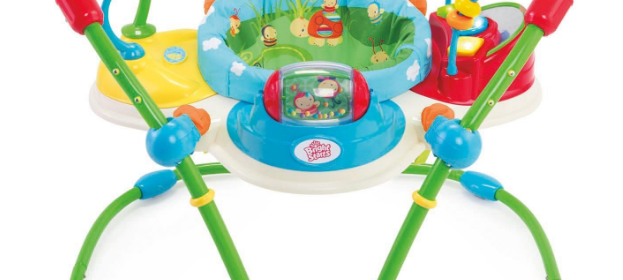
As your baby is growing, it’s important to have the right toys to help with their development through the coming months. With the help of activity jumpers, babies can establish a strong foundation for bone and muscle growth as well as boosting their fine motor skills. This list has the top-rated activity jumpers for babies that will keep them engaged and entertained.
Types
Fisher-Price Jumperoo
 Fisher-Price is one of the best companies to rely on when it comes to buying toys for your little one. Their Jumperoo collection gives babies the comfort and security they need to sit and play. The overhead canopy with hanging toys is phenomenal for encouraging the development of spatial sense and motor skills meanwhile making playtime more fun than ever before. It is incredibly stimulating with activities located all around the jumper. Once playtime is over, parents can easily pack up the unit and store it away.
Evenflo ExerSaucer
With the combination of learning, playing, and jumping, your baby will have the time of their life when they’re using the Evenflo ExerSaucer. With a 360-degree rotating bodice, babies can play with all of the interactive activities all around the jumper. They will be able to build their core strength and develop key muscles needed to promote healthy walking. With an integrated height adjustment feature, you can continue to use the unit for all ages, and it offers 2x more bounce than other jumpers on the market. Parents can also remove the toys from the unit to customize the playing experience.
Baby Einstein Musical Motion Activity Jumper
Third on the list of top-rated activity jumpers for babies is this Baby Einstein model. It offers an incredible amount of features that are not only useful for parents, but children as well. There are over 12 activities that your baby can enjoy including a light up piano that offers three different playing modes. The comfort features include a high back seat and top of the line padding for the utmost amount of comfort. The 360-degree rotating seat is essential for reaching all of the toys around the entirety of the unit so babies can have unrestricted access. With the machine washable seat, you can easily take the unit apart and sanitize it for safe play. Also, there are five different height settings, which make the unit useful throughout the most crucial years of your baby’s development.
Sassy Inspire The Senses Bounce Center
 The Sassy Inspire The Senses Bounce Center doesn’t offer as many features as the above three jumpers, but it is a cost effective and convenient solution for parents. This model offers three different height adjustment settings that can create a customized fit for your baby. The removable seat pad is great for regular cleaning and it also rotates 360 degrees, so your baby will have a full range of motion. With a mirrored spinner, play station, and wonder wheel, there are an ample amount of activities to keep your baby entertained. Also, parents can change the toys on the jumper to create new and exciting play experiences every day.

Many people have been becoming more into project management blogs, and some are even thinking of making it as their career. This has caused more contents and articles to popup from different sites.
Since many writers have been sharing and bestowing knowledge and experiences, it can be a great source of information for those who are just starting in this industry.
 Knowing the different characteristics of a great writer is a must if you want to follow the steps of these bloggers. But what are these characteristics? Here are some ideas so you would know if you are starting on the right path.
Professionalism
Writers must have this characteristic as many people, especially those who want to follow their steps, look up to them. This attribute must be present at all times and must be shown at all times.
Influence
Influence has been one of the most significant achievements for different writers. The more influence you have, the more effective you are in your work. It shows how you affect people who follow you.
Content quality
Although the primary goal of being a writer is to provide quality and truthful content, some may just provide fraud or unproven pieces of information on their writings.
Credibility
The history and trustworthiness of a writer must be known in the first place. Researching the writer could be a great start. Reading reviews of the writer and their contents will help you know more about their credibility.
Organized
A writer must have organized thoughts to keep his or her readers interested. Also, this is to help readers understand more about what they want to communicate. They must create content that has a lot of ideas without confusing readers.
Finds new strategies
Writers must create new strategies on how they can relay their information to their readers. Ways that make readers read more of their content and to keep them interested throughout their writings.
Listens to criticisms and suggestions
These content writers must be able to understand what their readers are asking for. They must be able to provide the needs of their readers to be able to
Being a writer is not an easy task; you must have complete dedication, passion, and understanding of your work. Being one with the audience is the key to having great content. Learning about updates will help you become a great writer.